

Silver
Gold is the oldest precious metal known to man and for thousands of years it has been valued as a global currency, a commodity, an investment and simply an object of beauty.
Our Products
Bullion Bars
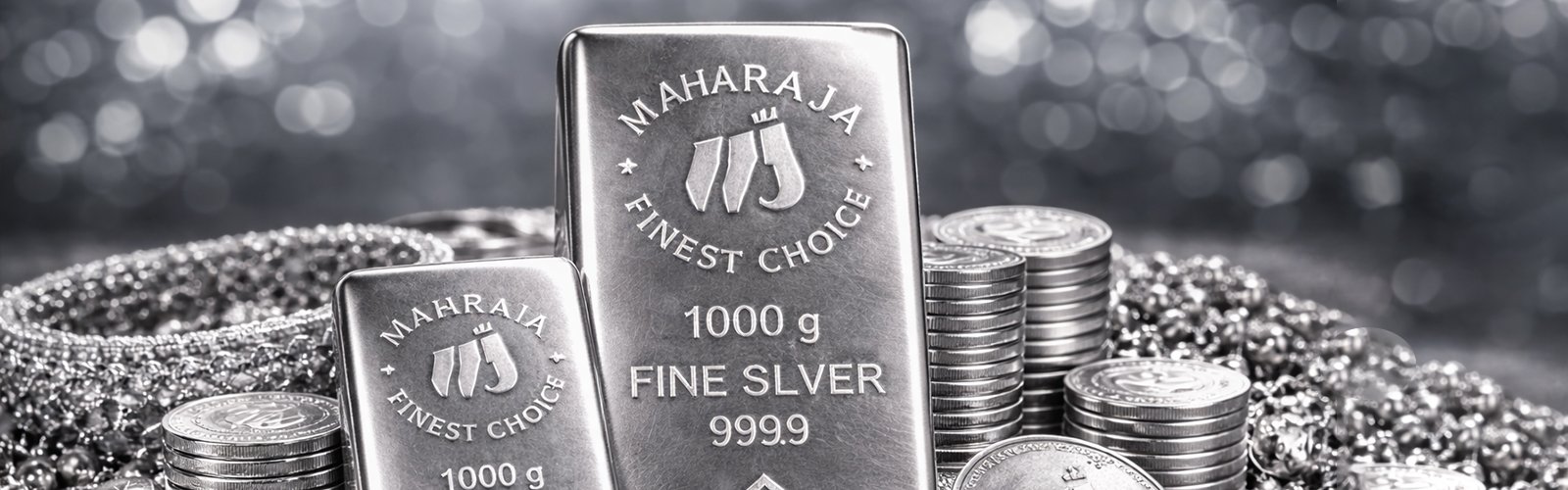
Premium-quality silver bars refined to the highest purity standards, ideal for secure long-term investment and wealth protection.
Value-Added Investment Bars
Expertly crafted silver bars designed to enhance your portfolio value with excellent purity, liquidity, and future growth potential.
Silver Coins
High-purity silver coins with beautiful minting and global recognition, perfect for gifting, collecting, and easy investment trade.
Major Characteristics of Silver
- Silver (Chemical Symbol: Ag) is a bright, versatile precious metal known for its softness, high malleability, and attractive appearance.
- It possesses exceptional electrical and thermal conductivity, reflectivity, and durability — making it valuable in both investment and industrial sectors.
- Most primary silver supply is produced as a by-product of mining activities for base metals like lead, zinc, copper, and gold.
- Additional silver comes from recycling and recovery of industrial scrap, old coins, and jewellery, making secondary supply highly responsive to price movements.
- Silver is unique because it functions as both an investment asset and an industrial metal, used in sectors such as electronics, solar energy, and healthcare.
- With growing utility and affordability, silver is widely recognized as a practical and accessible investment choice.
- It contributes to global financial reserves and remains a trusted hedge against inflation and currency risks.
- As a safe-haven asset, silver is widely used as a portfolio diversification tool by investors worldwide.
Factors Influencing the Silver Market
- The price of silver reacts strongly to economic changes, including industrial demand, inflation trends, and global financial conditions.
- Mining expansions, plant shutdowns, technological advancements, or changes in production capacity can shift the balance between supply and demand.
- Government regulations such as tax policies, trade restrictions, and import/export guidelines play a key role in determining metal flow into the market.
- Geopolitical developments, conflicts, and global market uncertainties may influence investor sentiment and price stability.
- When demand grows faster than supply, silver availability tightens — leading to increased reliance on government and investor-held reserves.
- Silver demand is driven by jewellery, silverware, manufacturing applications, and growth in high-tech industries like solar energy and electronics.
- In the UAE, demand is primarily investment and jewellery-focused, making the region’s consumption trends different from countries where silver is used more heavily in industrial production.
Global Market Scenario
Silver is actively traded on major international bullion exchanges such as the London Bullion Market Association (LBMA) and COMEX (New York), which influence global pricing and liquidity.
The LBMA serves as the central hub for over-the-counter (OTC) trading, while COMEX drives futures and derivative movements in silver.
International silver prices are typically quoted in US dollars per troy ounce, ensuring uniformity and transparency across global trades.
Frequently Asked Questions (Silver Investment)
Silver offers opportunities for both. Its industrial demand can drive short-term gains, while its scarcity and monetary value support long-term wealth preservation.
Silver prices can be influenced by technology and industrial demand, making it a strong performer during periods of economic growth — offering healthy profit potential over time.
Absolutely. Silver is more affordable than gold, making it a great starting asset for first-time and small-scale investors.
Yes. Larger denominations generally offer lower premiums per gram, which can enhance your overall return when selling.
Yes. Since silver is priced in US dollars globally, fluctuations in currency exchange rates — especially USD value — can influence local pricing.